Our courses:
Each semester, we offer a variety of cooking courses focusing on different topics. Select your desired course module to learn more about the course content and prices. All courses can also be booked as private sessions – you’ll find more information about this at the end of the list.
We look forward to welcoming you to our kitchen!
Molecular cuisine
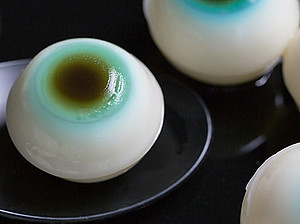
Using classics such as Campari caviar or Gorgonzola espuma, as well as creative creations like Amaretto gel and grapefruit air, you will learn the basic techniques of molecular cuisine.
In addition to the basic course we also offer an advanced class: Molecular 4-course menu with wine pairing.
Fermentation
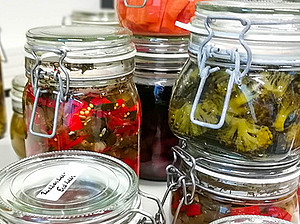
Traditional, energy-saving preservation techniques, as well as sustainable shopping and kitchen management, are the focus of our courses. Here, too, we offer two different classes:
A basic course that focuses on the sustainable use of food and fermentation in Asian cuisine Asian cuisine: Kimchi, miso paste, and more.
Medieval cuisine
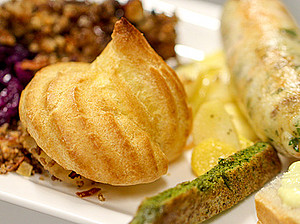
You will be introduced to medieval food culture and have the opportunity to read historical recipe texts — and then cook them yourself.
In five different modules, the diversity of ancient cuisine is showcased, from basic courses and grilling to avant-garde and home-style medieval cooking..
Japanese cuisine
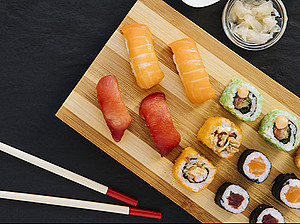
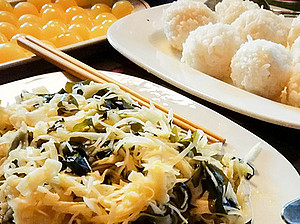
The Japanese cooking and dining culture is presented to participants in an exciting and engaging way. These intercultural cooking courses are seasoned and complemented with scientific insights.
With twelve different themed courses, we’re sure at least one or two will suit your taste. From sushi to bento boxes to hot pot — there’s something for everyone!
Private courses
You don’t have time for any of the scheduled course dates, would like to come with your own group, or want a course on specific topics?
We’re happy to create a custom course tailored to your wishes!
Cooking Like the Food Industry
In this course, participants cook a three-course menu using "industrial tricks":
From instant soup to restructured meat, the secrets of the food industry are revealed — and recreated in the kitchen.