Begin of page section:
Page sections:

  • Go to contents (Accesskey 1)
  • Go to position marker (Accesskey 2)
  • Go to main navigation (Accesskey 3)
  • Go to sub navigation (Accesskey 4)
  • Go to additional information (Accesskey 5)
  • Go to page settings (user/language) (Accesskey 8)
  • Go to search (Accesskey 9)

End of this page section. Go to overview of page sections

Begin of page section:
Page settings:

English en
Deutsch de
Search
Login

End of this page section. Go to overview of page sections

Begin of page section:
Search:

Search for details about Uni Graz
Close

End of this page section. Go to overview of page sections


Search

Begin of page section:
Main navigation:

Page navigation:

  • University

    University
    • About the University
    • Organisation
    • Faculties
    • Library
    • Working at University of Graz
    • Campus
    Developing solutions for the world of tomorrow - that is our mission. Our students and our researchers take on the great challenges of society and carry the knowledge out.
  • Research Profile

    Research Profile
    • Our Expertise
    • Research Questions
    • Research Portal
    • Promoting Research
    • Research Transfer
    • Ethics in Research
    Scientific excellence and the courage to break new ground. Research at the University of Graz creates the foundations for making the future worth living.
  • Studies

    Studies
    • Prospective Students
    • Students
  • Community

    Community
    • International
    • Location
    • Research and Business
    • Alumni
    The University of Graz is a hub for international research and brings together scientists and business experts. Moreover, it fosters the exchange and cooperation in study and teaching.
  • Spotlight
Topics
  • Our digital Advent calendar
  • Sustainable University
  • Researchers answer
  • Work for us
Close menu

End of this page section. Go to overview of page sections

Begin of page section:
You are here:

University of Graz Hands-on Labs Graz News Geschmackssache
  • Open Lab Graz
  • Taste Lab
  • Antiquity Lab Graz
  • Instagram
  • Team Hands-on Labs
  • Events
  • News

End of this page section. Go to overview of page sections

Thursday, 04 March 2021

Geschmackssache

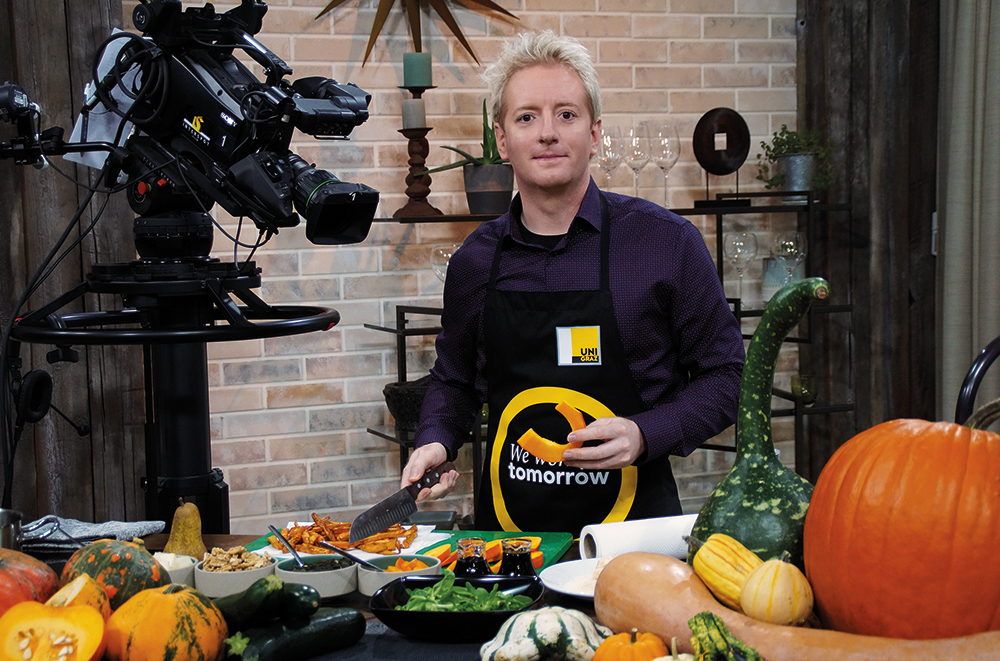
Molekularbiologie Fritz Treiber deckt auf, was tatsächlich in unserem Essen steckt. Sowohl regelmäßig in der ORF-Sendung „Studio 2“ und ab sofort auch in Buchform. Foto: Uni Graz/Treiber

Molekularbiologie Fritz Treiber deckt auf, was tatsächlich in unserem Essen steckt. Sowohl regelmäßig in der ORF-Sendung „Studio 2“ und ab sofort auch in Buchform. Foto: Uni Graz/Treiber

Heißhunger auf Fakten: Mit Fritz Treiber und neuem Buch durch den Ernährungsdschungel

Salz vom Himalaya, das den Braten extra verfeinert. Wasser von den Fidschi-Inseln, das noch schöner macht. Und der Detox-Smoothie, der ein Jungbrunnen sein soll – zumindest laut Herstellerfirma. Molekularbiologie Fritz Treiber deckt auf, was tatsächlich in unserem Essen steckt. Sowohl regelmäßig in der ORF-Sendung „Studio 2“ und ab sofort auch in Buchform. In „Faktencheck Ernährungsdschungel“ befreit Treiber – ausgerüstet mit der wissenschaftlichen Machete – die Lebensmittelregale von falschen Versprechungen.

Nahrungsaufnahme ist heute auch Ausdruck von Lifestyle. „Denn wer exklusives Wasser trinkt, glaubt auch seinen eigenen Status zu heben“, hält der Autor fest. „Ich will aufklären, aber nicht predigen“, begründet der Forscher, der auch selbst gerne kocht. „Für KonsumentInnen ist es mittlerweile schwierig, den Überblick zu behalten. Ich will sie dabei unterstützen, selbst entscheiden zu können und sich etwas Gutes tun.“ Und er räumt auf Basis von Forschungsfakten mit vielen Erwartungen auf. „Meistens handelt es sich um Marketing-Tricks. Viele Produkte sind wirkungslos, schlanker wird maximal das Geldbörsl“, warnt Treiber.
Damit einem nicht der sprichwörtliche Bissen im Halse stecken bleibt, serviert Fritz Treiber in seinem Buch, erschienen im Uebereuter-Verlag, interessante Hinweise über die Verdauung des Menschen und hilfreiche Tipps: Essenziell sei eine ausgewogene Ernährung, regional, saisonal. Und das schont sowohl den Körper als auch das Klima. Und „Wer selbst kocht, weiß genau, was er oder sie isst.“

created by Andreas Schweiger

Related news

Frohe Weihnachten & ein gutes neues Jahr!

Die Mitmachlabore verabschieden sich in die Weihnachtspause & wünschen erholsame Feiertage!

“Full STE(A)M Ahead for Teaching”: Open Lab Graz at the 4th Styrian STEM Forum

At this year’s Styrian STEM Forum in Judenburg, the Open Lab Graz once again presented itself with an information booth and engaged in conversations with numerous educators from across Styria.

Heide Beranek-Knauer on Citizen Science in Science Communication

The online lecture by Heide Beranek-Knauer, organised by the University Library Graz, was met with great interest. The focus was on the use of citizen science in science communication.

Japanese students discover the Planetary Health Diet in the Taste Lab

A group of students from our partner university in Hiroshima visited the University of Graz as part of a summer school. The programme included a cooking workshop on the Planetary Health Diet in our Taste Lab! With great enthusiasm and a willingness to experiment, the students tried out recipes that are not only delicious but also contribute to a more sustainable diet.

Begin of page section:
Additional information:

University of Graz
Universitaetsplatz 3
8010 Graz
Austria
  • Contact
  • Web Editors
  • Moodle
  • UNIGRAZonline
  • Imprint
  • Data Protection Declaration
  • Accessibility Declaration
Weatherstation
Uni Graz

End of this page section. Go to overview of page sections

End of this page section. Go to overview of page sections

Begin of page section:

End of this page section. Go to overview of page sections